Tuesday, January 18, 2011

The Diamond Formation - Oklahoma State Cowboys & Texas Christian University Horned Frogs

As many coaches will tell you, formations are simply that...formations. They are sets which offenses align in to execute their style and type of offense. One of the big formation tweaks to grace the college landscape this season was the Diamond formation, in which a QB aligned in the shotgun with a back behind him, and two backs flanking each of his side. The formation, which I'm sure has been doodled on paper by hundreds of coaches, and probably experimented with at lower levels offers many different options and could provide any style of offense with a new, and I'll admit fun formation to play around with.

This post came about from a comment on one of my other posts requesting a look at the Oklahoma State diamond formation. And while I tried looking for as much information on the Cowboys use of the formation, I was able to find even more information from both Oklahoma and TCU. So this post will deal with each teams use of the diamond formation.

Oklahoma State

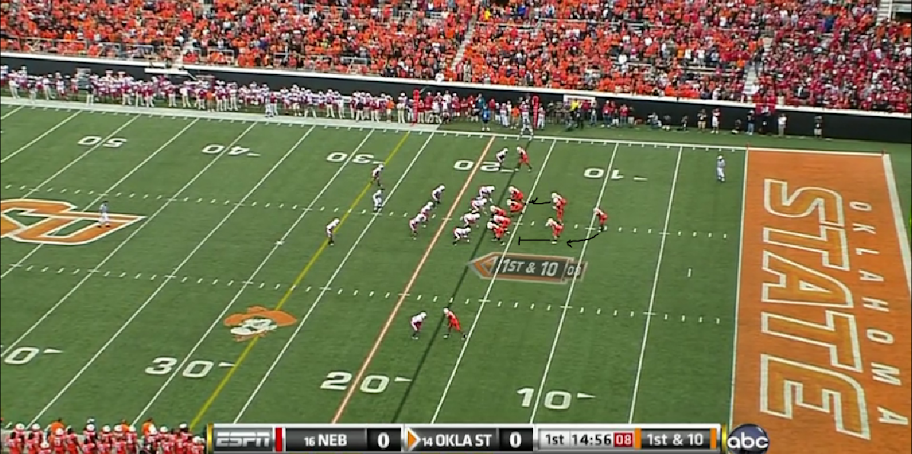
Inside Zone

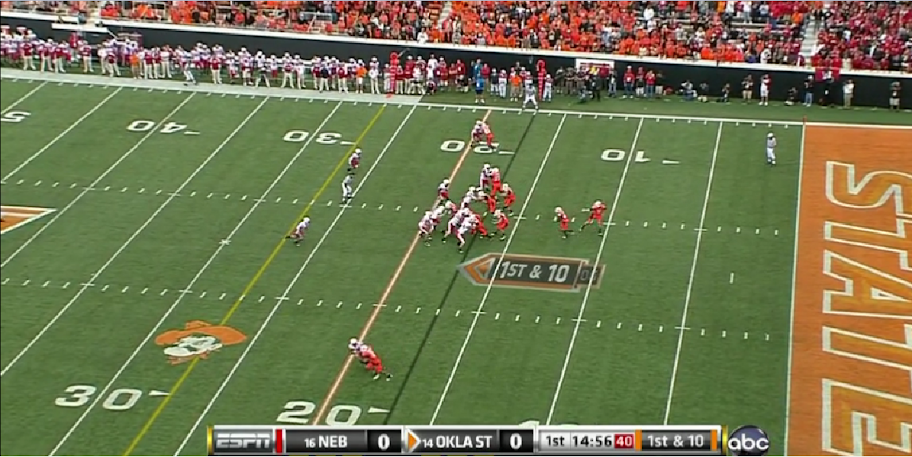
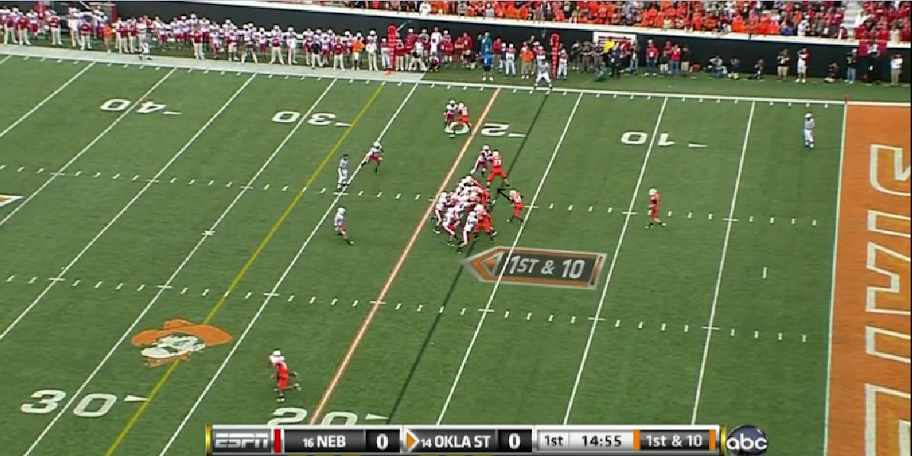
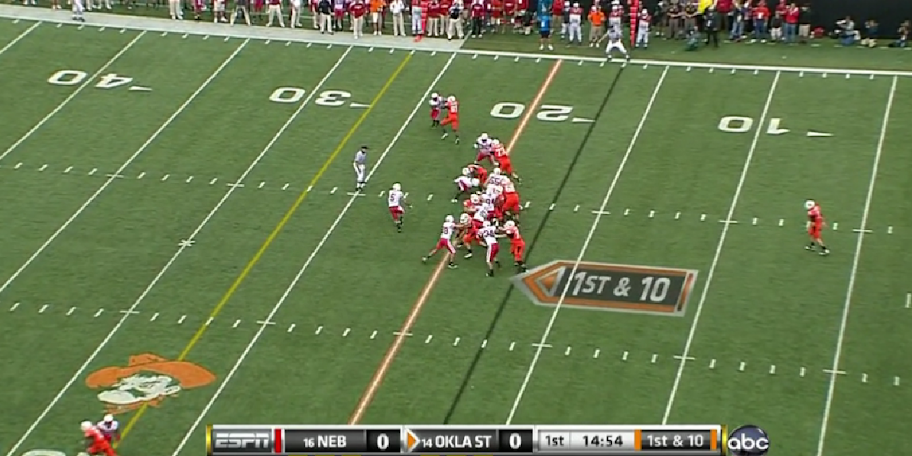
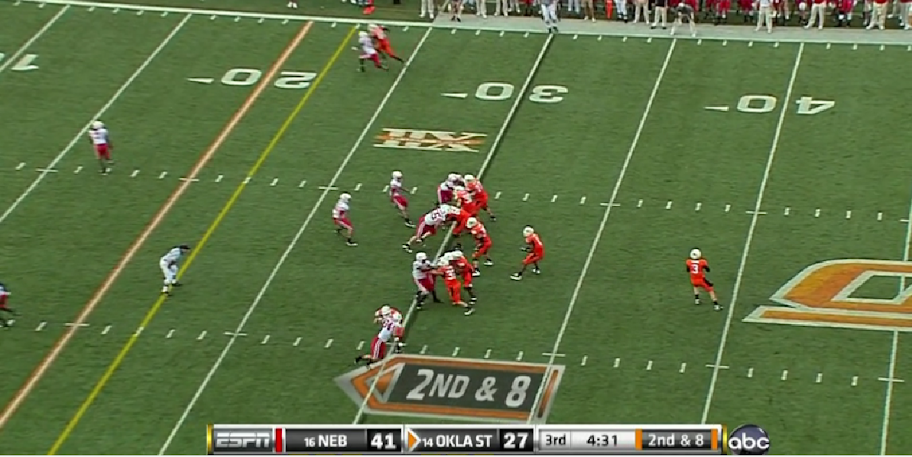
The Cowboys align in the diamond and they're going to simply run one of their base plays, the inside zone to the left. The half back on the right will cut off the pursuit by the defensive end, and the halfback on the left will lead through for the tailback.
IZ

IZ2

IZ

IZ

IZ

Inside Zone Motion

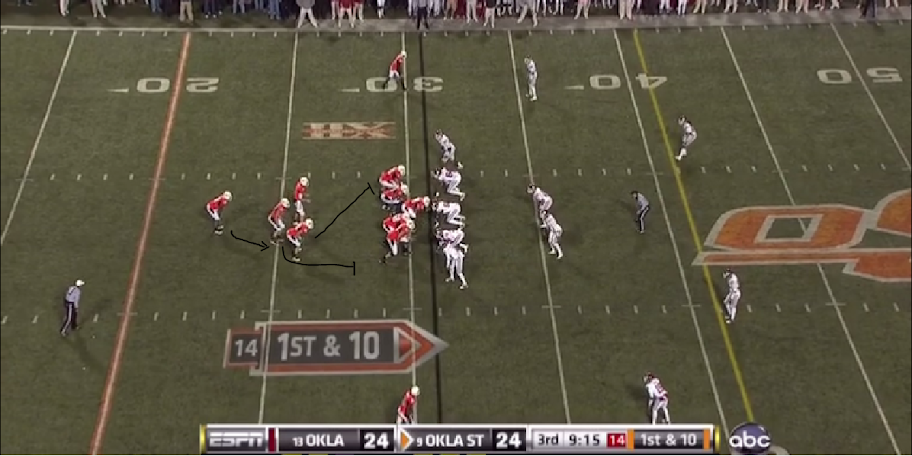
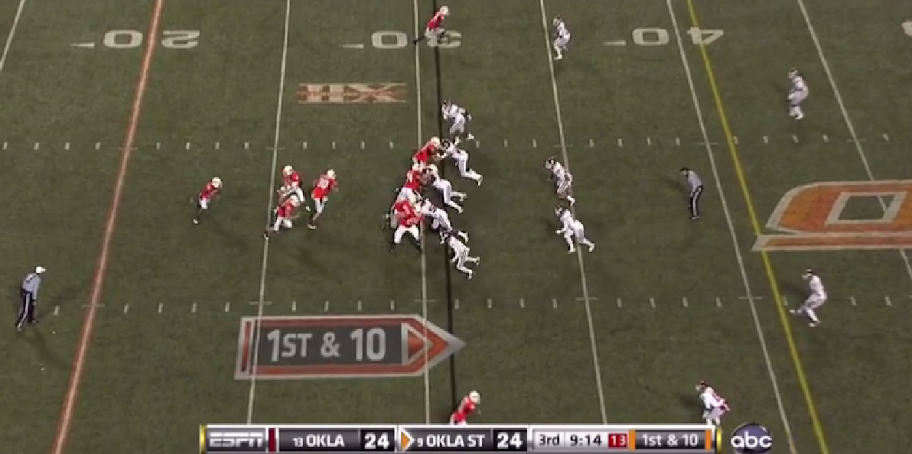
On this version of the inside zone the Cowboys once again align in the diamond, before the snap the left halfback motions over to the right.

IZ

The motion halfback will lead through play side on the zone to the right and the original half back on the right will cut off the backside pursuit of the defensive end.
IZ

IZ

IZ

IZ


Outside Zone

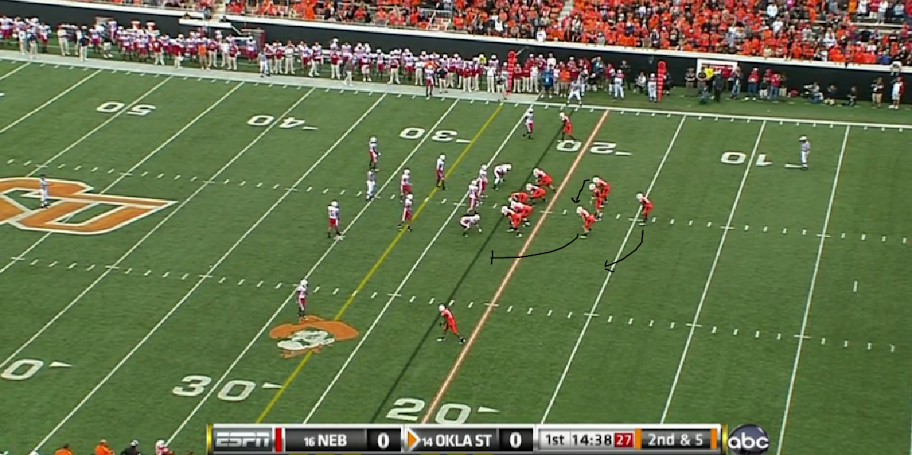
Oklahoma State also showed an outside zone out of this set to one of the half backs, with the other half back and tail back leading on the play. The halfback will cross in front of the QB and receive the hand off. This is really no different than any other shotgun outside zone play except for the ability to get another lead blocker out in front of the runner with having the tailback.
OZ

OZ

OZ

OZ


Inside Zone Play Action

The play action pass that OSU showed was a simple vertical route by the two split ends, while the backs showed an inside zone action.

PA

PA

PA


Texas Christian University

Dash Keep

One of TCU's featured plays this year was the Dash or inverted veer play (which I've already covered here). As I stated at the beginning of the post I mentioned that the diamond is nothing more than a formation to operate YOUR offense out of, and that is what TCU did by adapting the formation to the dash play.

This particular dash play will feature a read of the highlighted defensive end, the left guard pulling and leading for the QB and the halfback on the right and tailback leading for the left halfback should he receiver the hand off.


On the snap of the ball we see the mesh between the QB and RB. We also see the unblocked defensive end begin making his way up the field.


On this particular play the QB (Dalton) should have given and is quickly swallowed up by the unblocked defender.


Dash Play Action

This play action pass is highlighted by the two split ends running stutter-go routes on the outside, which really opens them up. The backfield executes a play action fake off of the Dash play.


Curl/Flat

This is a simple drop back pass, which seams to be a curl flat route, with the flat coming from the left halfback.


Outside Zone Read

Here is TCU's version of the outside zone, with a read on the backside defensive end. They execute it the same as OSU with the tailback and one halfback leading for the other.


Outside Zone Play Action

Play action pass off of an outside zone fake. We have a dig, post, and wheel by the left halfback.


Dalton looking to hit the halfback running the wheel up the sideline.


Dash Give

Here's the dash play with a give to the running back on his sweep path with two lead blockers.


As you can see both OSU and TCU provide a few different looks from the diamond formation, but play wise it is really nothing new. And that is what most coaches will tell you, formations are cheap, plays are not. Oklahoma State and TCU were able to run their base offensive plays from a new look, nothing too revolutionary about it.

Tomorrow I will post some of the things the Oklahoma Sooners did from their version of the diamond formation. As interesting as all of the things these teams are doing are, I think a more daring thing to think about is what could YOUR team execute from this set? Would it be beneficial to your offense? Does it translate over well to things you already do. With that being said, I definitely see this as being something these teams and others will expand off of next year.

Sunday, January 16, 2011

Auburn's Series Football

One of the things that many offensive coaches strive for is to construct a series of football plays that resemble each other at the snap of the ball. This series of plays will utilize a base play, a counter off of the base play, and usually a play action pass to accompany the two previous plays.

Here are some links to great articles discussing different types of series football. Check these out for my ideas and thoughts on the topic of series football.

Belly/Double Dive, Offensive Basics of Series Football, and Spread Gun Wing-T Buck Series.

Continuing with my breakdown of the Auburn offense from this past season I'm going to show an example of Gus Malzahn's use of series football inside of his offense. Malzahan has stated that his offensive roots come from the wing-t, which then makes the following idea that a man known for his genius of the spread offense uses series of football. This series of three plays was taken from Auburn's first game of the season against Arkansas State, and all plays were from the first quarter.

The Base Play - The Inside Zone

The series of three plays I will discuss all start out in a very similar fashion. The tailback will align out of the backfield as a slot receiver on the right and motion into the backfield.


On the snap of the ball the running back to the left of Newton will come across Newton's body for a play fake and the tailback will begin to come down hill for the inside zone hand off.


The H-back will help secure the defensive end.


Auburn has a nice little play.


The Second Play - The Counter

I've already discussed Auburn's counter play, and actually used an example of this same exact look from Auburn's stomping of South Carolina in the SEC Championship.

This play works out of the same set and motion.


On the snap the running back to the left will lead outside to help block the force player as the H-back and left guard execute their role in the counter blocking scheme.


Another successful play for the Tigers.


The Third Play - The Play Action Pass

The final play in the series and the one that gashes Arkansas State for a big touchdown is the play action pass that comes off of the counter action.

Notice this time the formation is slightly different, the tailback who has aligned as the widest receiver to the right is now aligned in the slot. He will once again execute his high motion into the backfield.


On the snap of the ball the tailback comes down hill and we see the running back to the left of the QB release outside like he had on the counter play, along with that the left guard once again pulls.


Both wide receivers have taken inside releases and are pushing to the middle of the field and getting vertical. We also see the running back that has left the backfield increase speed and begin his wheel route up the sideline, looking to outrun the corner that had released inside with the wide receiver.


Finally, we see the wheel route beating the trailing corner and leaving himself wide open for a touchdown.


Three plays, all from very similar sets and initial motions which accomplish three different things. The ultimate goal is setting up the play action pass to take advantage of aggressive defensive back play. I believe one of the biggest reasons the play action pass is so wide open is because Malzahn does not wait to long to throw it. He comes out, he runs the inside zone and the counter, on the next series he comes out and throws the play action pass. The defense must be weary of the two plays they've already seen out of that set, only to leave them reeling when Malzahn unleashes the dagger.

Followers